Some Windows and macOS users are encountering the service error 79 whenever they attempt to initiate a printing job on their HP (Hewlett Packard) printer. This issue is confirmed to occur with multiple macOS iterations and it’s confirmed to occur on Windows 7, Windows 8.1, and Windows 10.
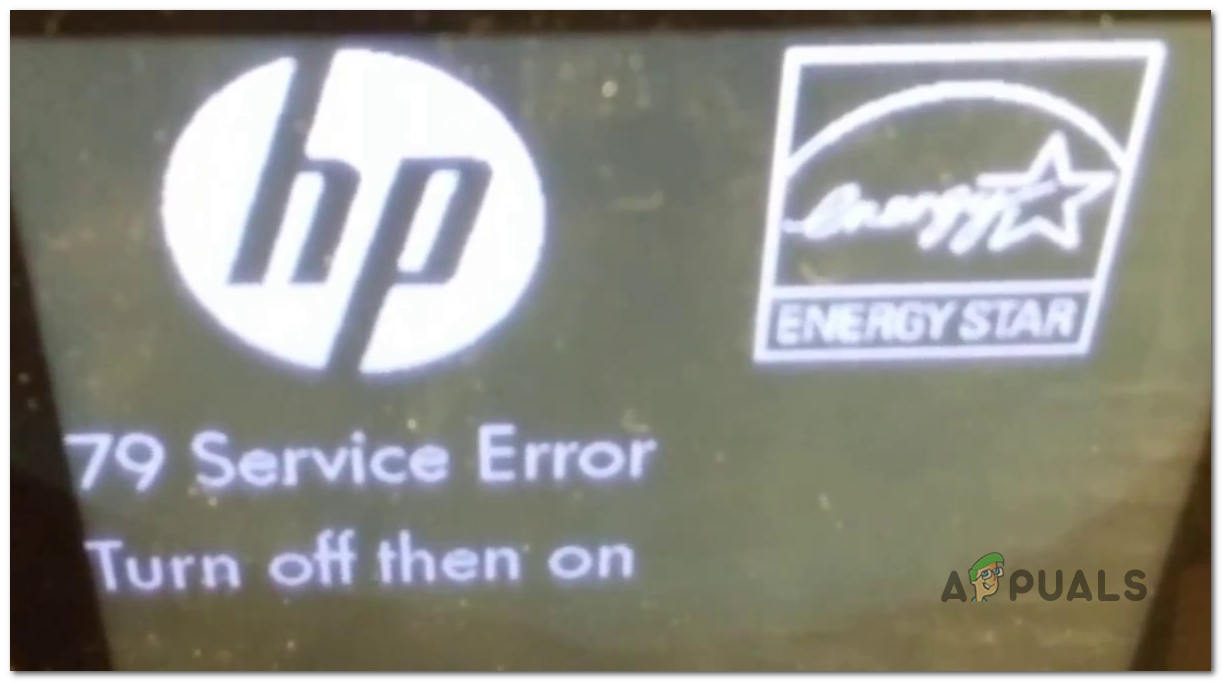
79 Service Error with HP Printers
After investigating this particular issue, it turns out that this problem can occur due to several different documented causes. Here’s a shortlist of potential culprits:
- Printer queue glitch – If your HP printer is connected to a Windows 10 computer, you might expect to see this error due to a queue glitch. If this scenario is applicable, you should be able to fix this problem by running the Printer troubleshooter utility and applying the recommended fix.
- Firmware glitch – Under certain circumstances, this problem can also occur due to a case where the native firmware available on your printer glitches out and refuses to take on new printer jobs. In this case, a power cycle operation should fix the issue automatically.
- Outdated printer firmware – As it turns out, this problem can also occur if your printer is waiting to install a critical firmware update before it can resume the active printing jobs. You can do this manually, from your printer menu of using the HP Smart App.
- Underlying hardware issue – Under certain circumstances, this problem can be caused by some type of hardware problem that cannot be resolved by a non-technical. In this case, you should get in contact with an HP Live agent for the guidance of getting your printer fixed.
Method 1: Running the built-in printer Troubleshooter (Windows 10 Only)
Before you try any of the other fixes below, you should troubleshooter to make sure that the problem doesn’t originate from a problem with the way your Windows 10 computer is queuing your printing jobs.
This glitch is fairly common on Windows 10 and has been confirmed by several affected users that were previously encountering the 79 error code with their printing HP.
Fortunately, you should be able to fix this problem by running the built-in printing troubleshooting utility. This contains a selection of automated repair strategies that will successfully resolve the majority of port-related issues with Windows-connected printers .
If you haven’t tried this fix yet, follow the instructions below to run the Printer Troubleshooter and see if it ends up fixing the 79 error code:
- Open up a Run dialog box by pressing Windows key + R . Next, type ” ms-settings:troubleshoot” inside the text box and press Enter to open up the Troubleshooting tab of the Settings app in Windows 10. Accessing the Troubleshooting tab
- Once you’re inside the Troubleshooting tab, move rightwards, then scroll down to the Get up and running section. Next, click on Printer, then click on Run the Troubleshooter from the newly appeared context menu. Running the Printer Troubleshooter
- Once you start this utility, wait patiently until the initial scan is complete and see if any of the fixes get recommended. If a viable repair strategy is found, click on Apply this fix and wait for the operation to complete. Applying the Fix Note: Depending on the fix that gets recommended for your particular situation, you might need to follow a series of manual steps.
- Once the recommended repair strategy is successfully deployed, reboot your computer and see if the problem is fixed.
If the problem is still not fixed, move down to the next potential fix below.
Method 2: Disabling IPv6 Protocol
If the methods above didn’t work out for you, you can try disabling IPv6 as it can be the culprit as well. However, if it doesn’t work for you I suggest you turn it back on as it can cause several issues to other programs that use IPv6 protocol. Follow these steps, to disable IPv6:-
- Press and hold the Windows Key and Press I . This shortcut should open Windows Settings app.
- Once Windows Settings are opened Navigate to “Network & Internet”
- Press the option named “Change adaptor options” Disabling IPv6
- Now right-click on your Network Adaptor and press go to “Properties”
- Untick the checkbox in front of “Internet Protocol Version 6 (TCP/IPv6)” Disabling IPv6
- Restart your computer and check to see if the issue persists.
Method 3: Power Cycle the HP Printer Device
According to some affected users, this problem can also due to some kind of glitch with your printing device. In this case, the first thing you should do is reset the entire printing mechanism – The procedure of doing so is universal and will be applicable to any HP printer model you might be using ( LaserJet and OfficeJet).
This operation is by no means technical and will not expose you to the risk of damaging your printing device. This is the equivalent of doing a factory reset on other devices.
If the problem is firmware-related, the procedure below should resolve it swiftly.
Here’s a quick guide on power cycling your HP printer device:
- Start by ensuring that your printer is fully turned on and in idle mode (no job currently active). Note: If you can still hear noises coming from your printer, don’t move forward! Instead, wait patiently until the machine becomes silent before moving down to the next step below.
- After you ensure that your printer is running in idle mode, the next step is to disconnect the power code from the rear of your printer. After you do this, ensure that you’ve also removed the power cord from the wall outlet. Unplugging printer
- After you have successfully unplugged the printer, wait for at least 60 seconds before plugging the cord back in in order to ensure that the power capacitors are completely drained.
- After this period has passed, reconnect the power cord and start your printer conventionally.
- Once the warm-up period is finished, initiate another printing job, and see if the problem is now fixed.
In case you are still seeing the same 79 error code, move down to the next potential fix below.
Method 4: Update Printer Firmware
As it turns out, this problem is also confirmed to occur in those instances where a new firmware version is available for the printer that is triggering the 79 error code.
Keep in mind that HP regularly releases new printer versions aimed at improving quality of life and fixing bugs and glitches. But every once in a while, they end up releasing a mandatory update that is required in order to make the printer compatible with the OS build that it’s currently connected to.
If the reason why you are seeing the printer service 79 error code is that you’re missing a critical update, updating your printer firmware should take care of the issue.
When it comes to updating your Hewett Packard printer driver to the latest, you have 3 ways forward. Feel free to follow any of the following guides (if supported by your printer) below to bring your printer build to the latest.
A. Update directly from the Printer
The instructions below will only work as long as you’re using a printer released after 2010. In order to be able to update directly from the printer, your device needs to support Web Services and have access to the Internet.
The exact instructions on installing a pending firmware update on your printer will be different from model to model. However, we’ve created a general guide that should make it easier for you to install the pending update:
- On printers with an ePrint button or icon touch or press the HP ePrint icon, then access the Setup (Settings menu). Next, look for a setup entry named Product Update or Check Product Updates. Update the driver Note: On printers with text-based menus, access the Setup / Settings / Service . Next, access the Preferences / Printer Maintenance / Tools menu, then choose Web Services / Printer Update / LaserJet Update.
- If you’re prompted to accept the Terms of Service or sign in with your account, follow the instructions and enable Web Services if required.
- Wait until the update procedure is complete, then restart your printer manually if it doesn’t do so by itself and see if the problem is fixed at the next system startup.
B. Download newer Firmware Manually
If you’re using an older HP printer that doesn’t support web services, you’ll need to download & install the latest firmware update manually from the HP Customer Support download page – this is applicable on both Windows and macOS computers.
Here’s a quick guide on how to download & install newer printer firmware manually:
- Start by making sure that your printer is connected to your local network (via ethernet or USB cable).
- Next, on your PC or macOS, open up the HP Customer Support Download Page , click on Let’s identify your product to get started, click on Printer and follow the on-screen instructions to identify the latest firmware update for your printer. Identifying the correct firmware update
- Next, you’ll need to type in your printer model. After you do so, click on Submit, then ensure that you select the operating system (Windows or macOS).
- Finally, click on Firmware, then click on Download and wait for the download to complete.
- Once the file is finally saved on your computer, open it to start the firmware updating process.
- Inside the installation window, follow the on-screen instructions to complete the installation of your printer’s firmware. Updating Printer Firmware
- Once the installation is complete restart both your computer and your printer, then see if the problem is resolved.
C. Using the HP Smart App
If your HP printer supports the HP Smart app, you can easily install any new firmware update via the HP Smart app – available on Windows, macOS, Android, and iOS.
In case this application is supported, follow the instructions below to download, install & use the HP Smart App to update your printer firmware version to the lastest:
- Download the HP Smart app version according to the platform that you plan on using it on: Windows Computers macOS Computers Android iOS
- Once the installation of the app is complete, open it and click on your Printer Name to start the initial setup.
- Once the initial setup is complete, go to Settings (Advanced) and click Advanced Settings.
- Finally, click on Tools (Web Services) and click on Printer Updates (Product Update) and click on Check Now to make the app search for new available firmware.
- In case new firmware is indeed available, follow the on-screen prompts to install the pending update, then restart your printer and see if the problem is still occurring.
In case you’re still seeing the service error 79 on your HP printer, move down to the final potential fix below.
Method 5: Contact HP Support
If none of the potential fixes above have worked for you, the only viable thing you can do by now is to get in contact with HP support. Several affected users that went to this router have reported that a technical successfully troubleshot the issue for them remotely.
By all accounts of users that went this route, HP support is fairly responsive as you can expect to reach a live agent without much trouble. The way it usually goes is they’ll offer support over the phone through a series of troubleshooting steps and if the problem still persists, you’ll be asked to send the device in for repairs.
Here’s a quick guide on getting in touch with an HP live agent:
- Open up your default browser and visit the official support page of HP .
- From the list of available options, click on Printer at the top of the page. Accessing the Printer Contact menu
- Once you get to the next screen, enter your printer serial number inside the Serial Number box and click on Submit. Identifying your printer
- Once you have successfully managed to identify your HP printer model, you can advance to the menu by navigating through HP Contact Forms > Get phone number .
- Use the recommended phone number to get in contact with a qualified technician, then follow through with the recommended troubleshooting steps.
How to Fix “Printer is in an error state” Issue?
This error message can occur when you add a new printer to your computer or send print operations to an existing printer in the network. There are several reasons why the Print Spooler service might stop or not start automatically at all. These reasons can range from your Windows Firewall to your printer drivers, among multiple other factors.
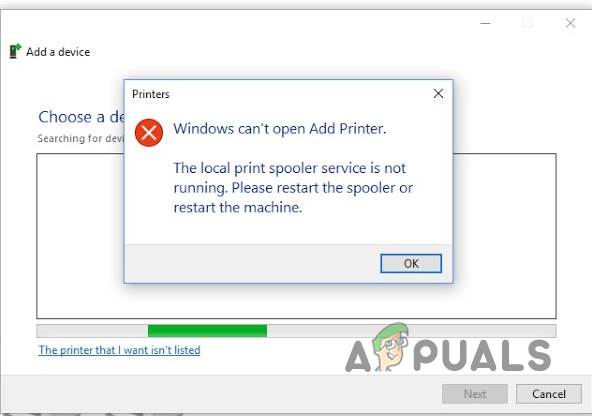
Local Print Spooler Service is not Running Error Message
When the Print Spooler service is down, you will not be able to interact with your printer. This is because the Print Spooler service acts as a communication bridge and facilitates the interactions you wish to have with your printer. Therefore, ensuring the service runs in the background without any issues is a high priority.
In this article, we will guide you through several methods you can use to rectify the problem. As it turns out, the cause of the error message can vary in each case, which is why it is essential that we examine the possible sources of the issue before diving into the solutions. With that in mind, let’s start right away.
- Windows Defender Firewall interfering with the connection – One of the reasons that can result in the error message in question is the Windows Defender Firewall. This happens when the Windows Firewall prevents your computer from sending the request due to a false positive. As a result, the Print Spooler service is affected Is kept at bay, unable to perform its tasks. The service may stop running in such situations, resulting in an error message. When this occurs, you will need to disable your Windows Firewall temporarily to fix the issue.
- Windows Update bug – Another cause for the Print Spooler failing to start, which can be a problem with a specific update. This has been reported by several users who experienced the same issue. In most cases, the issue was resolved by a new update. If this case is applicable, you must check for any pending updates and install them on your computer.
- Malfunctioning Printer Drivers – As it turns out, the printer drivers you are using on your system can also cause the issue at hand. This can happen when the drivers malfunction or become damaged due to a recent Windows update. In such a scenario, you will need to reinstall the proper drivers to resolve the issue.
- Windows file corruption – System file corruption can result in various issues. The Print Spooler service is no exception, as it is part of the operating system for facilitating printing jobs. You can get rid of corruption through a couple of built-in utilities, i.e., SFC (System File Checker) and DISM (Deployment Image Servicing and Management).
- Intervention of third-party programs – Interference from a third-party program on your computer is not new; rather, it occurs frequently. As it turns out, in some cases, third-party programs on your computer can interfere with the Print Spooler service, resulting in the service malfunctioning. These issues can often be traced back to security software or the printing programs responsible for your printer.
- Damage to existing print files – Any previous or pending printing tasks are stored on your computer within a specific directory. In some cases, corruption of these files in your Windows directory can cause the service to malfunction. The service spools these files to the printer to perform the printing task. In such a case, you will have to remove those files to fix the error message..
- Duplicate printers – Finally, if you have multiple printers on your network, the issue can also arise due to duplication. Duplication can occur when you have multiple printers connected to the same port or IP address. In such a scenario, you will need to remove the duplicate printers to get everything back to working properly.
Now that we have gone through various possible causes of the issue in question, let us start going through the possible solutions you can implement to resolve the error message.
1. Set the Print Spooler Service to automatic.
If the Print Spooler service cannot start automatically when required, you will not be able to perform any printing jobs. This can happen when the service’s startup type is set to manual. In that case, you will have to manually start the service before performing any print tasks.
When you begin troubleshooting the problem in question, you first need to ensure that the Print Spooler service can start automatically. If the service is not running in the background when you attempt to issue any printing commands, your system will be unable to communicate with the printer.
If this case is applicable, you will need to change the service’s startup type so it can start automatically whenever needed. To do this, follow the instructions below:
- First, open the Run dialogue box by pressing the Windows key + R on your keyboard.
- In the Run dialogue box, type “ services.msc ” and then press Enter. Opening up Services
- In the Services window, look for the Print Spooler service. You can press P on your keyboard to jump to services starting with the letter P. This should make the search easier.
- Once you find the Print Spooler service, double-click on it to open the Properties window. Print Spooler Service
- In the Properties window, change the Startup type to Automatic Print Spooler Service Properties
- Click “ Apply ,” and then hit “ OK.
- See if the error comes up again.
If you still face the error message, move on to the next fix below.
2. Edit the Print Spooler Service Configuration.
If changing the startup type of the Print Spooler to automatic does not fix the issue for you, you can try configuring the service even further as a possible solution. As it turns out, there have been reports of users resolving the problem in question by altering the computer’s response when the service fails.
You can do this from the properties window of the service. You have the ability to specify actions for the first, second, and subsequent failures of the service. To do this, follow the instructions below:
- Open the Run dialog box by pressing the Windows key + R shortcut.
- Type “ services.msc ” in the Run dialogue box and press Ente. Opening up Services
- Locate the Print Spooler service and double-click on it to open the Properties window. Print Spooler Service
- In the Properties window, switch to the Recovery tab.
- There, select the ‘ Restart Service ‘ option for ‘First Failure,’ ‘Second Failure,’ and ‘Subsequent Failures.’ This will restart the print spooler service upon any failures it encounters. Changing Print Spooler Recovery Actions
- Once you have done that, click “ Apply ” and “ OK .” Check if the error message disappears with this action.
3. Remove duplicate printers (if applicable).
One of the reasons the problem occurs is when multiple printers share the same port or IP address. This can be helpful when the error message occurs only on specific systems in your network. When this happens, you need to check if the systems use the same network printer.
If this case is applicable, you must remove the duplicate printers, which should do the trick for you. Removing devices from your computer is a straightforward process with the help of the Control Panel. Follow the instructions below to do this:
- First, open the Control Panel by searching for it in the Start Menu. Opening up Control Panel
- In the Control Panel window, navigate to Hardware and Sound . Control Panel
- There, click on the Devices and Printers option. Navigating to Devices and Printers
- Now, if you are using Windows 11, a Settings window should appear.
- On the Settings window, click on Devices. Navigating to Devices
- There, at the bottom, click on the ‘ More devices and printer settings ‘ option. Accessing Additional Devices and Printers Settings
- After that, in the Devices and Printers window, locate the duplicate printers and right-click on them.
- From the drop-down menu, choose the ‘ Remove device ‘ option. See if this resolves the issue. Removing Printer
If you are still experiencing the error message, proceed to the following method below.
4. Install pending Windows updates.
As it turns out, in some cases, Windows updates can cause issues with certain operating system components. While Windows updates bring new features and patches for known bugs, specific updates can be problematic. However, such issues are often resolved in subsequent updates.
Many users have reported that they began facing the issue after installing a specific Windows update. Additionally, there have been claims of the issue being resolved in subsequent updates. As such, if you are someone who has not installed any updates recently, doing so might be a good option, as it could potentially fix the problem for you. Follow the instructions below to install any pending updates:
- To begin, open the Settings window by pressing the Windows key + I on your keyboard. Windows Settings
- In the Settings window, navigate to Windows Updates .
- Once you are there, click on the “ Check for Updates ” button to download and install any pending updates. Checking for Windows Updates
- Wait for the updates to install. Your computer will restart automatically during the process. After that, check if the problem persists.
5. Disable the Windows Defender Firewall.
The Windows Defender Firewall is a vital part of the Windows operating system. As the name suggests, the Windows Defender Firewall monitors your computer’s incoming and outgoing connections. As a result, it helps keep your computer secure on the internet.
In some scenarios, the Windows Defender Firewall may be the culprit for the error message in question. This can occur when the Windows Firewall does not allow spooler requests to go through correctly. If this case is applicable, you will need to temporarily disable the Windows Defender Firewall to resolve the issue. To do this, follow the instructions provided below:
- First, open up the Control Panel by searching for it in the Start Menu. Opening up Control Panel
- On the Control Panel window, navigate to System and Security . Control Panel
- There, click on the Windows Defender Firewall option. Navigating to Windows Defender Firewall
- Now, on the Windows Defender Firewall screen, click the ‘ Turn Windows Defender Firewall on or off’ option on the left-hand side. Windows Defender Firewall Settings
- Then, click the “ Turn off Windows Defender Firewall ” option for both Public and Private networks. Turning off Windows Defender Firewall
- Finally, click OK to save the changes.
- See if the issue goes away with this.
If the problem no longer persists, you can try adding your printer software to the firewall’s whitelist. Once you do this, the firewall will allow any requests made by the software, and the issue should not resurface. In addition, you will be able to turn the firewall back on. Follow the instructions below:
- On the Windows Defender Firewall screen, click on the ‘ Allow an app or feature through Windows Defender Firewall ‘ option. Navigating to Allowed Apps Section
- There, click on the “ Allow another app ” button. Windows Defender Firewall Allowed Apps
- After that, click on the ‘ Browse ‘ button and navigate to the installation directory of your printing software. Open the executable file. Allowing a New App Through Windows Defender Firewall
- Once you do that, click on the Network Types button and check both the Public and Private checkboxes. Changing Network Types
- Finally, click ‘ Add ‘ and then hit ‘OK
6. Close third-party programs.
According to several user reports, the error message can also occur due to the interference of a third-party program with the Print Spooler service. Background processes interfering with another process are not new, and they happen all the time. This is especially true for any computer security programs you might use.
However, the problem may not be due solely to a third-party security program. Any process running in the background can be the culprit. Some users have reported HP Wolf Security as the culprit. Therefore, we recommend closing any unnecessary third-party programs running in the background.
Once you close the unnecessary programs, check if the error message goes away. If it does not, move on to the next fix below.
7. Delete the printer files.
As it turns out, the spooler sends files you wish to print to a folder inside the Windows directory. These files exist in the respective directory for the purpose of any pending print tasks. However, in some cases, corruption or damage to these files can result in the malfunction of the Print Spooler service.
When this occurs, you will need to clear out the contents of the respective folder to resolve the issue. To accomplish this, you will require administrative privileges, as the folder resides in the Windows installation directory. With that in mind, please follow the instructions below:
- First of all, open up a File Explorer window.
- Using the File Explorer window, navigate to the C:\Windows\System32\spool\PRINTERS directory. Navigating to Printers Folder
- Once there, delete all the files inside.
- After doing that, restart your system.
- Once your PC boots up, see if the problem still occurs.
8.Reinstall the printer drivers.
Drivers are essential in the Windows operating system, as they are used for communication with their respective hardware. There have been reports of error messages occurring due to faulty or malfunctioning drivers. It turns out that if the drivers on your system for your printer are not working correctly, you will not be able to use your printer.
If this case is applicable, you will need to uninstall your current printer drivers and then reinstall them. Doing so will also update the drivers, as you will be downloading them fresh from your printer’s manufacturer. To do this, follow the instructions below:
- To begin, open the Device Manager window by searching for it in the Start Menu. Opening up Device Manager
- In the Device Manager window, expand the Print Queues list. Device Manager
- From the drop-down list, locate your printer and right-click on it. Click on the ‘ Uninstall Device ‘ option. Uninstalling Printer
- After that, head to your printer manufacturer’s website and download the latest drivers available for your printer.
- Before you install the new drivers, restart your computer.
- Once your PC boots up, install the latest drivers and see if the issue goes away
If you still encounter the ‘Print Spooler service not running’ error message, proceed to the next method below.
9. Repair Corrupted System Files.
Finally, if none of the methods above have freed you from the problem in question, it is very likely that the issue is occurring due to the corruption of the system files. In such a scenario, you can use two built-in utilities to repair the corrupt files.
The utilities in question are System File Checker (SFC) and Deployment Image Servicing Management (DISM). Running these scans will locate corrupt files and replace them with functioning copies. To do this, follow the instructions below:
- First, open the Start Menu and search for the command prompt. Click the “ Run as administrator ” option to open it. Opening up Command Prompt as Admin
- Once the command prompt window is open, type in “ sfc /scannow ” and then press Enter. Performing SFC Scan
- Wait for the SFC scan to complete the system scan and search for any corrupt files.
- After the SFC scan, type in “ dism /Online /Cleanup-image /RestoreHealth ” and press Enter. Running DISM Utility
- Wait for the DISM utility to restore any corrupted files.
- Once you do that, see if the problem still persists.
49.4C02 error in HP printers is a well-known error among users that halts all the operations being performed on the printer and asks for restart. The error when occurs is displayed on the printer screen. For some lucky users, this was only a one-time thing but for some it became a permanent headache rendering the printer unusable as whenever one would turn this printer on, the error would appear again within seconds.
The 49.4C02 error and other similar errors have been largely attributed to the miscommunication between the target printer and the system that sent the print. That could be easily caused by certain PDF files one is trying to print or an outdated firmware version of that printer. In case of a PDF file print job, the printer will give display this each time it’s restarted unless that specific print job is cancelled from the computer it’s sent. In case of a network printer, it could become problematic tracing down the system that sent the print. Before proceeding with more complicated steps below, try turning the printer off and unplugging the power and the network cable (if connected). If networked, find which computer has a print job stucked in the printer que, and delete it, put the printer power back in and the network cable back in. Turn the printer back on and test.
Solution 1: Upgrade Printer’s Firmware
Firmware in a printer is similar to what Windows is to your computer. It is an operating system for a printer. Outdated firmware is the first suspect when this error occurs on an HP printer. Firmware updates are occasionally released for this exact reason i.e. to fix various bugs and errors in a printer similar to the one you are facing now.
Before we continue, you will have to return the printer into Ready state. As this error generally appears due to a PDF file being sent to print, you will have to cancel that print job.
If you are the only one sending the print, Press the Windows key and type Devices and printers . Click on Devices and Printers in the search results. Right Click on your printer installed and click See what’s printing .
Right Click anywhere on the window that just opened and click Cancel All Documents .
If it’s a network printer and you do not know who is sending the printer, simply Unplug the network cable from the printer to disconnect it from the network. Now Restart your printer and leave the network cable unplugged .
Through Firmware Update Utility
To update the printer’s firmware, firstly you will have to check the current Firmware Version running on your printer. To do, you will have to Print a Configuration page from the troublesome printer. Use the interface on the printer itself and navigate to Administration or Information or the Configuration section in the menu. Its location may differ by the model of the printer you have.
Once you have the current firmware version, Go To the HP’s drivers support website .
Enter your printer model name under “Enter my HP model number”. The support page will open for that printer. Select your Windows version under Operating system.
In the results below, click on the Firmware section.
Latest Firmware will be on top. Next to Firmware update utility, if the Current Version is later than the version you have installed, Click the Download button to download it.
Run the Firmware update Utility you downloaded earlier. Select your Printer to update from the drop down list. If it is a network printer, connect it directly through a USB Printer cable and install it on your system. Now click on Send Firmware.
It may take a few minutes, so be patient.
Through FTP on Network
The HP’s Firmware update utility is known to fail on some printers. On network printers, it can also be done over the network using the FTP protocol . If the printer gives the error every time you connect it to network, then either turn off every other computer attached to it, or change the IP address of the printer.
Now for this method, you will have to Download an . rfu (remote firmware update) file for your printer’s model.
To do so, Go To the HP’s drivers support website . En ter your printer model name under “ Enter my HP model number ”. The support page will open for that printer. Select OS independent or Cross Platform from the drop down menu under Operating Systems .
Expand the Firmware section below. Next to the firmware for Windows Operating system , Check the version number . If the version number is later than the version you have installed, Click the Download button to download it.
Open the Downloaded file. If it was an exe file, it will ask for a location to extract the .rfu file. Extract it and place it on your Desktop .
Now, make sure that you know the IP address of the printer. You can know it through the Configuration page that you can print following the method mentioned above.
Now Press and Hold the Windows key and Press E . Windows explorer will open. In the address bar above, type ftp://[Printers IP Address] . For example, if the IP address is 192.168.5.123 then you would type ftp://192.168.5.123 . Now Press Enter .
There will be a folder named PORT . Copy the .rfu file from the Desktop and Paste it in the PORT folder. The process will take some time. Restart printer once it done. If you cannot see a folder named PORT, you can Paste it in the window itself.
Your firmware will be updated now. Now print the file you were trying to print before and check if the issue occurs. If yes, then move on to the next solution.
Solution 2: Update Drivers to PCL6 Driver
PCL6, PCL5 or PCL5e are scripting languages used in drivers for printers. Using the PCL6 drivers for HP printers is a known remedy for the 49.4C02 error.
To install the PCL6 drivers, first you will have to download it. To do so, go to the HP’s drivers support website .
Enter your printer model name under “Enter my HP model number”. The support page will open for that printer. Select your Windows version under Operating system.
In the results below, click on the Driver – Universal Print Driver to expand it. Search for HP Universal Print Driver for Windows PCL6 and Click the Download button next to it to download it.
Run the downloaded file and it will ask for a location to extract its content. Define a location or leave the default in it and Click Unzip . Its Installation will startup automatically. Follow the onscreen instructions now.
You can also do so manually by first Uninstalling the target printer. Now Reinstall it, but when it asks for drivers, don’t use the drivers already installed. Use the drivers from the folder in which you just extracted the PCL6 drivers . If the extraction location was left as default, then it would be C:\HP Universal Print Driver\pcl6-xxx-x.x.x.xxxxx.
Restart your computer and the error should be gone now. If not, move on to the next solution.
Solution 3: Print PDF as Image
This error mostly occurs after a user prints a PDF file. Usually that PDF file has fonts a little too complex that can mess up the printer’s memory. You can counter this issue by printing the PDF as an image.
To do so, firstly Clear the print queue that has the troublesome PDF file in its list using the method given in Solution 1 . Unless that PDF is removed, the printer will continue giving that error.
Now Restart the printer.
Open the PDF you were trying to print. Press and Hold the Windows key and Press P to bring up the Print Window . Now Click on Advanced button .
Place a Check next to Print As Image . Click OK and Print the document. The location of the Print As Image option may vary from printer to printer.
Check if the issue is resolved. If not, then it’s the PDF file that is corrupt.
The “Printer is in an error state” message appears when Windows fails to properly communicate with your connected printer. In this condition, print jobs may stay stuck in the queue or fail to initialize entirely, even though the printer seems powered on and connected. The issue can occur with both USB and network printers and usually points to a driver, spooler, or port configuration problem .

Other recurring causes include communication timeouts over USB or Wi-Fi, incomplete driver installations after Windows updates, and queued print data that traps the spooler in an error loop.
1.Clear the Print Spooler and Reinstall the Printer
Over time, damaged or leftover print files can accumulate inside the spool folder. These corrupted entries may prevent new print commands from being processed, locking the spooler into an error state and making Windows think your printer is malfunctioning.
Clearing the print spooler removes those faulty files, while reinstalling the printer refreshes driver links and registry configurations to restore proper communication.
- Press Windows + R , type services.msc , and press Enter .
- Find Print Spooler , right-click it, and select Stop .
- Open File Explorer and navigate to: C:\Windows\System32\spool\PRINTERS
- Delete all files in this folder these are stuck print jobs causing the conflict.
- Return to the Services window, right-click Print Spooler , and choose Start .
- Finally, reinstall your printer through Settings > Bluetooth & Devices > Printers & Scanners .
2.Install the Correct Printer Driver
Sometimes, Windows automatically installs a generic or incompatible driver that prevents proper communication between the printer and the system. This mismatch leads to failed print jobs or detection errors.
Installing the manufacturer’s official driver ensures both devices communicate correctly and eliminates compatibility problems.
- Press Windows + I to open Settings , then navigate to Bluetooth & Devices .
- Select Printers & Scanners .
- Choose your printer and click Remove .
- Visit the official website of your printer’s manufacturer.
- Download and install the latest driver for your exact model (or the Universal driver if recommended).
- Restart your PC and reconnect the printer.
3.Enable Legacy Plug and Play for LPT Port
Older printers connected through LPT ports may rely on Legacy Plug and Play detection to initialize properly. When this option is disabled, Windows might fail to detect the printer during startup.
Re-enabling this feature restores the hardware handshake and allows the printer to initialize automatically when your system boots.
- Press Windows + X and select Device Manager .
- Expand Ports (COM & LPT) , right-click your printer port (e.g., LPT1 ), and select Properties .
- Go to the Port Settings tab.
- Check Enable legacy Plug and Play detection .
- Click OK and restart your computer.
- Inkjet printers excel in high-quality color printing, making them ideal for photos and images but require frequent ink replacements.
- Laser printers are better suited for high-volume, text-heavy documents, offering faster printing speeds and lower long-term costs.
- Choose based on needs—inkjet for versatile, vibrant prints and laser for durability, speed, and cost efficiency in office settings.
Just as a Polaroid camera isn’t suited for professional wedding shoots but excels at capturing true moments, in the world of printing, the two printer types— inkjet and laser — excel in their respective use cases , and one cannot overshadow the other as the best option for everyone. But there certainly can be a better choice for you! How would you know which one? By learning about both, of course !

Which Is Better Inkjet or Laser Printer
- How Do Printers Work?
- What is an Inkjet Printer?
- What is a Laser Printer?
- Inkjet vs. Laser Printer: Pros & Cons 1. Paper Compatibility 2. Timing 3. Cost 4. Durability
- Which One Should You Use?
How Do Printers Work?
With advancements in technology and increased resource availability , printers that were once exclusive to specific groups are now accessible to a broader audience. However, affordability in no way equals a compromise in quality, all thanks to the wide range of printer options available today.
At the basic level, all printers transfer minuscule dots onto a sheet of paper to replicate images and text documents. This is done by sending electronic signals from the computer to the printer’s control board , which interprets them into instructions suitable for the specific printing technology used. And that’s exactly what differentiates the various printer types from one another.
While there are various printing technologies available today, the two most common ones are inkjet and laser . Funny enough, the difference between the two is what remains a mystery for many.
What is an Inkjet Printer?

Inkjet Printer
The mechanism of an inkjet printer is hinted at by its name. But for those who want a bit more explanation, this type of printer produces text and images by spraying liquid ink droplets onto paper. It uses ink cartridges that come in separate colors or combined into a single unit . These cartridges have one or more nozzles that dispense ink in precise patterns, producing the desired output.
But what does that say about inkjet printers’ applications, you ask ? Well, due to their ability to produce vivid colors and fine details , these high-quality prints make them popular for personal / home use and even some areas of commercial printing.
What is a Laser Printer?

Laser Printer
Laser printers, on the other hand, use electrical currents and toner (fine solid particles of powder) to produce images and text on paper.
The laser beam is targeted at a light-sensitive rotating drum to create charged particles (an electrostatic image) that attract the toner dust. This toner is then transferred to a sheet of paper , which passes through a set of heated rollers called a fuser . This helps bond the toner particles to the paper, resulting in a permanent print.
This is what makes laser printers ideal for office and business use. They’re also larger than inkjet printers and capable of printing high volumes at a faster speed. What’s more ? Considering their target audience, they also come with optional trays and advanced security features .
Inkjet vs. Laser Printer: Pros & Cons
While the fundamental difference between the two printer types lies in their printing mechanism , one cannot ignore how the prints come out to be, leading to distinctions in quality , performance , and overall cost .
In terms of quality, both printers have areas in which one excels the other. Inkjet is particularly useful for image printing and color reproduction because of the use of ink cartridges and laser for text-based documents ideal for high-volume environments. But wait, there’s more to the debate !
1. Paper Compatibility
Inkjet printers are capable of printing on numerous paper types , so they can produce glossy photographs, matte prints for framing, or even prints on non-traditional materials like vinyl or plastic .

Various options for photo paper
On the other hand, laser printers don’t work well with many options, which limits their applications beyond those requiring standard printer paper , especially because heat-sensitive paper won’t work with the heat rollers .
2. Timing
Though laser printers are known for quick batch printing, they do, however, take time to warm up before getting started, something that inkjet printers do not require. In terms of printing, inkjet printers do take a little extra time , but they are lighter and more compact , making them easy to fit into cramped settings or limited space desks.
3. Cost
There’s a price at purchase and a price you pay in the long run . Laser printers have a higher initial cost , however, they rely on toner rather than ink cartridges, which takes longer to use up.
Contrarily, ink cartridges get used up quickly and require either a replacement or a refill (if you want to go green ). In fact, they may even dry out if there’s an extended gap between printing jobs , rendering them unusable. However, between ink and toner cartridges, the replacement is easier and cheaper for the former than the latter.

Ink Cartridge (left), Toner Cartridge (right)
4. Durability
One thing’s for sure, laser printers outperform when it comes to text-based documents, and inkjet printers when it comes to graphics and image printing. Of course, both printers can print anything you want, but each has its strong suit.
Inkjet printers blend colors seamlessly, producing sharp , clear pictures but slightly fuzzy text . Conversely, laser printers deliver crisp , bold , and well-defined lettering , but they’re not ideal for printing-colored photos .
Moreover, since laser printers use fusers for binding, their prints are more durable . Then again, ink cartridges are water-based , so printed images may fade and have a higher chance of being damaged when exposed to moisture .
Which One Should You Use?
Asking a cashier to do your taxes or a chef to work on your car sounds pretty silly, right? Well, so does expecting a laser printer to handle photographs and an inkjet printer to manage reports and bulk documents. Each product is designed with specific strengths, even though they may perform multiple tasks.
When choosing a printer, consider factors such as speed , efficiency , affordability , and the desired output . Inkjet printers offer high-quality prints, are affordable , compact , and compatible with various paper types, but they require more frequent ink replacements .
Whereas, laser printers, though pricier , excel in printing clear office documents with greater print yields and lower running costs . Ultimately, the best choice depends on your specific needs and usage patterns .
Printer durability depends on usage frequency and the length of printing jobs. Because laser printers are known for frequent batch printing, they’re made of robust components designed for durability. And due to their reliance on toner rather than liquid ink, they don’t experience issues with ink drying or clogging, thus requiring less frequent maintenance and extending their operational lifespan. However, it cannot be said that an inkjet printer, if used with proper care and not overburdened, cannot last just as long, if not longer.
Although laser printers are popular for printing black and white documents with excellence, they absolutely can produce a range of colors and thus deliver color prints, although their quality is not the very best to rely upon.
Printing professional photo prints is better with inkjet printers as they support higher GSM (grams per square meter) paper and produce better color reproduction. Laser printers, on the other hand, do not offer as much color accuracy and detail, which is needed for high-quality, vibrant printed images.
- Even in our digital age, physical materials like paper still play a vital role, especially in printing, where the type of paper can greatly affect the final product.
- Different printers are best suited to specific paper types, such as glossy for photos or cardstock for invitations, highlighting the importance of choosing the right paper for your project.
- The variety of paper options, with different textures, weights, and finishes, allows for creativity and precision in achieving the desired look and feel for each print job.
Choosing the right paper for your print job is not an easy task. You need to understand factors like paper weight , finish , and brightness . The combination of these qualities results in numerous paper types, each suited to a specific use case.

Types of Paper for Printing
You wouldn’t want to print your cherished pictures on cardstock paper, and you certainly wouldn’t want to print your business card on standard printer paper. Knowing the different options available can help you make the most of your printer for a broader range of projects.
- Types of Printer Papers 1. Inkjet Paper 2. Laser Paper 3. Copy Paper 4. Matte Paper 5. Glossy Paper 6. Photo Paper 7. Card Stock Paper 8. Bond & Label Paper
- Which Paper is Best for Your Print Job?
Types of Printer Papers
1. Inkjet Paper

Inkjet Paper
As the name suggests, inkjet paper is specifically designed for inkjet printers to create clear text and sharp images . It can be further classified into various types, such as glossy , matte , and card , to suit different needs. However, this doesn’t mean that other paper types won’t work with these printers. The specification is simply to achieve the best results, as inkjet paper tends to absorb ink and is thus made slightly thicker .
2. Laser Paper

Laser Paper
Similarly, laser paper is specifically designed for laser printers to produce high-quality results. This type of paper is usually best for office use, such as memos , invoices , and high-volume documents . The finish is typically matte to avoid delaying drying time.
Since the toner stays on the surface of the paper in laser printing, it is not designed for maximum absorption, unlike inkjet paper, which can withstand more moisture comparatively.
3. Copy Paper

Copy Paper
While some may use copy paper and laser paper interchangeably, there’s a distinct difference between the two. Copy paper is the kind you usually find next to your office printer in a large box. It is thinner and less expensive than laser paper and, well , gets the job done. However, color accuracy and print quality may sometimes be compromised .
4. Matte Paper

Plain Matte Paper
Matte paper, or more commonly known as printer paper, features a non-reflective, smooth , and non-textured finish that provides a clean and professional appearance. For this reason, it is ideal for printing reports and resumes , although the latter is less common these days.
But what’s even better, you ask ? You can produce double-sided printouts without having silhouettes show on the other side. Talk about a great balance of cost-effectiveness and resource efficiency in the long run!
5. Glossy Paper

Glossy Paper
Looking for a touch of pizzazz ? Then a glossy finish is the way to go. It not only enhances contrast and color saturation , but when combined with durable inks and color-depth cartridges, it produces brilliant and crisp photographs and marketing materials . Text documents are not the best use of this paper, unless , of course, you’re aiming for an extra element of sophistication.
6. Photo Paper

Photo Paper
Photo paper is specifically designed for printing photographs and is available in several finish options, such as matte , glossy , and satin . In fact, it often has a different finish on each side and is thicker than most papers.
The purpose of this paper, as clear as the results it produces, is to deliver exceptional sharpness and color reproduction . After all , what good is a photograph if it’s not preserved in its best quality for many years to come? However, you should check your printer’s manual or the manufacturer’s website to see if it can handle photo paper and its thickness.
7. Card Stock Paper

Card Stock Paper
You might still be wondering what to use for printing business cards , wedding invitations , flyers , or other formal materials for your brand. Using regular printer paper or glossy paper for these purposes may not be very convincing. For this, you need the durability and sturdiness offered by card stock paper.
The premium feel and longevity of this material can withstand harsh handling and minimize damage. However, keep in mind that not all printers are designed to handle card stock. So, if you use an incompatible printer , be prepared for paper jams or other similar issues.
8. Bond & Label Paper

Bond & Label Paper
Ever noticed how receipts and labels paper feel different from your everyday paper? That’s because it’s a special material called thermal roll or bond roll , which features a texture similar to fabric.
The “ thermal ” in its name refers to the printing process that uses heat to imprint the image onto the paper. This method not only reduces ink costs but also prevents smudging and smearing . However, receipts and labels aren’t its only applications. Thermal paper is used in various fields, from art to business and beyond . But mostly where ink permanence is the top priority.
Which Paper is Best for Your Print Job?
Since everyday tasks typically require standard matte paper and most office printers use laser paper for document reproduction, you don’t need extraordinary printers or thicker paper for these tasks.
But if you wish to print cards , invitations , and brochures , you’ll definitely need to stock up on card stock and glossy paper. And if you’re a photographer with a studio, you wouldn’t need to purchase anything other than photo paper —until you decide to leave the profession, that is.

A and C-Series Paper Sizes
But it doesn’t end there. Each paper type is available in various sizes , ranging from A1 to A10 . While standard printers typically support A4 and/or A3 sizes, specialized printers can accommodate a wider range of sizes, along with different coatings and weights, providing maximum flexibility for your printing needs.
Embarking on the journey of 3D printing is both exciting and, at times, a bit daunting. Thankfully, this innovative technology has become considerably accessible, allowing users to convert digital designs into real-world objects. For 2024, a wide selection of 3D printers is designed specifically for beginners.

This guide offers genuine recommendations whether you are an educator, an entrepreneur working on prototypes, or a hobbyist pushing creative boundaries, to help establish a solid base for your 3D printing endeavors. But before we dive into these top picks, let’s explore what makes a 3D printer truly outstanding. Here’s a breakdown of the key considerations based on specific needs and applications.
Print Quality: Focus on obtaining high-quality prints first and foremost. Opt for a printer that generates detailed, clean, and precise prints, as these are crucial for any printing project. Elements such as resolution, measured in microns, play a role; a lower micron count results in a higher resolution. Furthermore, the layer height is pivotal, with thinner layers yielding finer details. While faster speeds can reduce print time, they might affect print quality, hence balancing speed and quality is key.
Build Volume: The build volume dictates the maximum size of objects you can print. Choose a printer with a build volume that aligns with your intended print sizes.
Reliability and Durability: A dependable 3D printer should consistently produce quality prints and remain durable over time. Prioritize printers with robust construction and reliable components.
Ease of Use: For beginners and those desiring easy printing, prioritize features that enhance usability. Look for elements like a user-friendly interface, perhaps via touchscreens or intuitive software. Automatic bed leveling diminishes the necessity for manual calibration, streamlining the process. Additionally, filament sensors are handy for notifying users about low filament levels or if issues arise during printing.
Material Compatibility: Projects may require diverse materials. Top 3D printers support multiple filaments like PLA, ABS, PETG, and specialized filaments such as flexible or composite variants.
Connectivity: Depending on your setup, connection options for your printer may include USB , SD card, Wi-Fi , or Ethernet. Some models even offer remote monitoring and control via apps.
Software: The software included with the printer, or compatible options, should smoothly translate designs into printable files. Look for slicer software balancing user-friendliness with advanced features.
Safety Features: Safety is paramount, particularly in educational settings or around children. Consider printers with enclosed areas for temperature regulation and burn prevention. Furthermore, HEPA filters reduce potentially harmful particle emissions, enhancing operational safety.
Support and Community: Having a strong user community and excellent customer support is invaluable, especially for troubleshooting and learning how to use your printer.
Price: Lastly, consider the cost. The best printer for you balances these factors with your budget.
Here, we have intricately curated a list of the best 3D printers for beginners. So, let’s get started.
1. Creality Ender 3 V2 Neo
Best Value
Pros
- Auto-Leveling
- Improved Extruder System
- Removable Build Plate
- Print Resume Feature
Cons
- No Touchscreen
- Print Speed Limitations
- No Double Z-Axis
- Bare-Bones Appearance
No products found.
No products found.
The Creality Ender 3 V2 Neo combines accessibility with precision, designed to make 3D printing approachable without sacrificing quality. This model exemplifies Creality ‘s dedication to innovation, incorporating a CR Touch auto-leveling system for perfect layering. The printer features a PC steel printing platform, delivering strong adhesion and a smooth foundation for creations.
Its all-metal Bowden extruder ensures durability and stable performance, suitable for both beginners and experienced users. This upgraded version of the well-known Ender 3 V2 model is crafted with user-friendliness and print quality in focus. It comes 95% pre-installed, facilitating an easy setup.
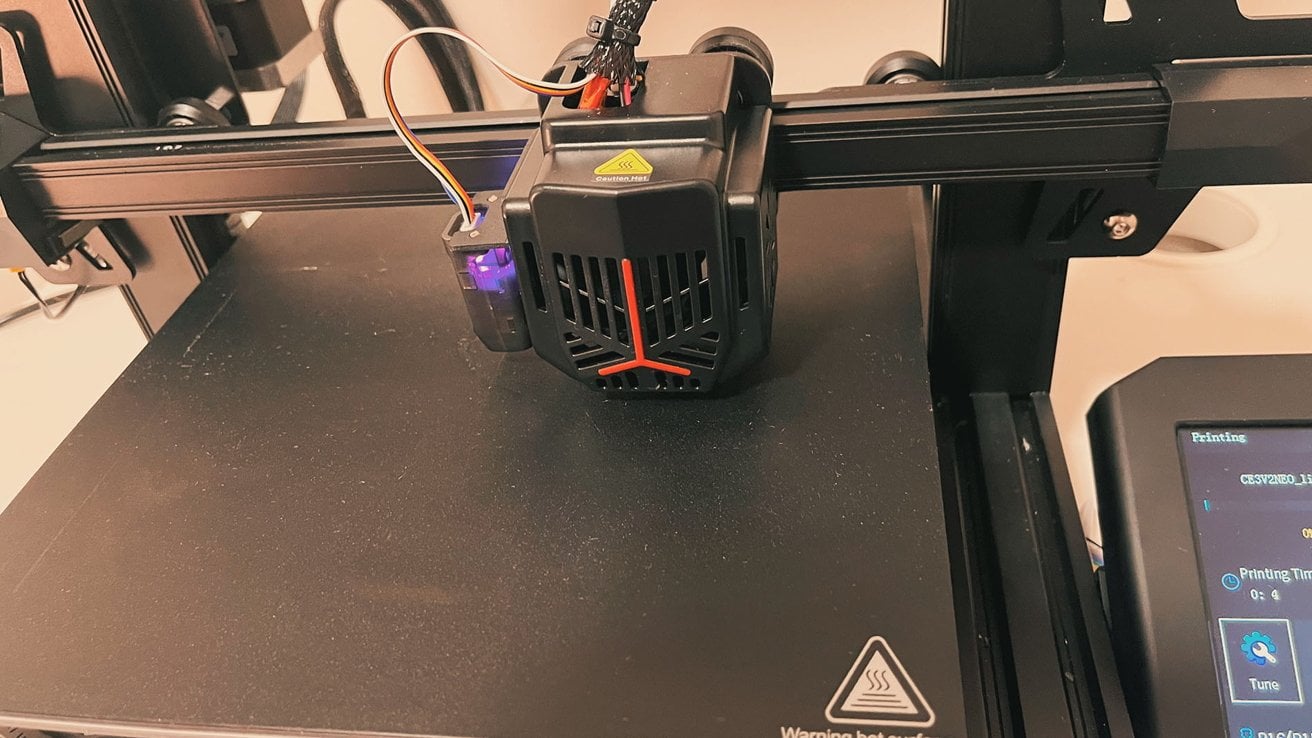
Creality Ender 3 V2 Neo
The addition of the CR Touch auto-leveling kit significantly improves leveling accuracy, while the PC steel platform and all-metal Bowden extruder support its dependability and longevity.
↪Pros
- Auto-Leveling: The CR Touch auto-leveling feature performs excellently, simplifying the process for beginners by negating manual leveling challenges.
- Improved Extruder System: Enhanced with metal construction, the extruder system boosts the printer’s performance and durability.
- Removable Build Plate: The removable build plate eases print removal, preventing damage caused by overly adhered prints.
- Print Resume Feature: The print resume feature saves progress during power outages, allowing for a smooth continuation once power is restored.
↪Cons
- No Touchscreen: Despite its improvements, the Ender 3 V2 Neo lacks a touchscreen interface, which could enhance user experience.
- Print Speed Limitations: Higher speeds (around 120mm/s) may result in reduced print quality, indicating an optimization for moderate speeds.
- No Double Z-Axis: Missing a double Z-axis, the printer might not offer the maximum stability and precision that some users seek.
- Bare-Bones Appearance: Some might find the Ender 3 V2 Neo’s design quite basic, lacking the aesthetic appeal found in other models.
This printer is part of Creality’s initiative to make 3D printing more accessible and user-friendly while incorporating features catering to advanced users. It strikes a balance between usability and performance, making it a suitable choice for many 3D printing enthusiasts.
2. Original Prusa i3 MK3S+
Best Overall
Pros
- High-Quality Prints
- User-Friendly Software
- Good Support Resources
- Included PLA Spool
Cons
Build Volume
No Built-In 3D Scanner
Dated Interface
Price
The Original Prusa i3 MK3S+ symbolizes continuous innovation, reflecting years of meticulous enhancement to provide superior print quality and reliability in 3D printing. A key feature is the SuperPINDA probe, which ensures meticulous first-layer calibration, paving the way for flawless prints. Its advanced extruder is engineered to handle filament smoothly and adapt seamlessly to various types, ensuring hassle-free printing.
More than a tool, this printer opens a world of precision and limitless possibilities, built upon Prusa’s lasting dedication to quality. As an evolution from the MK3S , the MK3S+ introduces enhancements while preserving the reputable Prusa i3 series’ legacy.
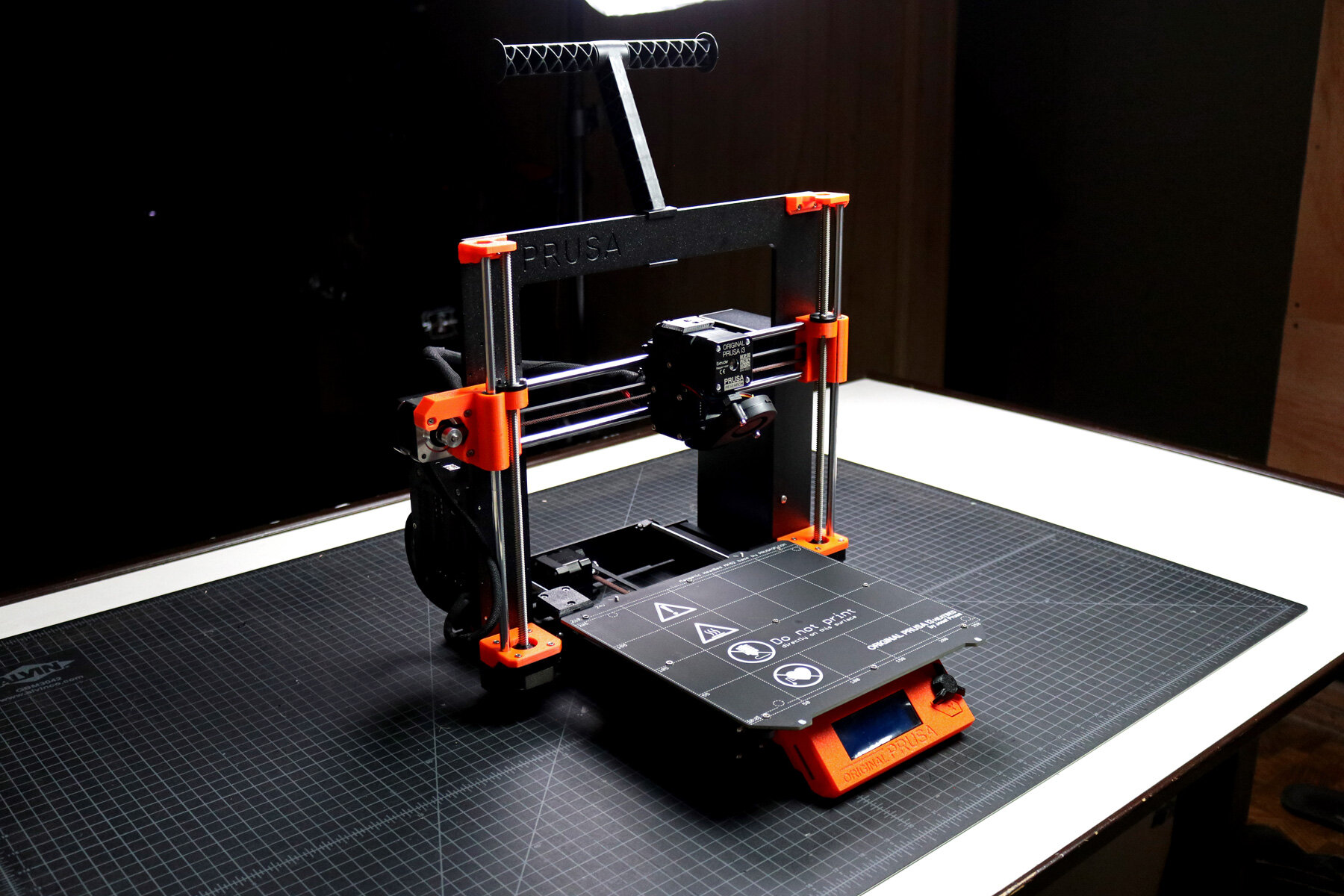
Original Prusa i3 MK3S+
Additionally, the integrated filament sensor detects any filament type or color, enhancing its functionality. Retaining its direct drive system, the MK3S+ remains notably advantageous for printing flexible materials, lending versatility to a broad spectrum of printing requirements.
↪Pros
- High-Quality Prints: The MK3S+ consistently delivers high-quality prints without errors, demonstrating its dependability.
- User-Friendly Software: The printer is accompanied by easy-to-use yet powerful software that supports multiple filament types.
- Good Support Resources: Prusa offers a professionally printed user guide and excellent support materials for the MK3S+.
- Included PLA Spool: A 1-kilogram PLA spool is included with the MK3S+, a beneficial bonus for beginners.
↪Cons
- Build Volume: The build volume might be slightly small for the price, which could limit larger projects.
- No Built-In 3D Scanner: The MK3S+ lacks a built-in 3D scanner, unlike some other models.
- Dated Interface: The LCD screen and interface are somewhat outdated compared to more current 3D printers.
- Price: Although the MK3S+ is a robust printer, some users may feel it doesn’t justify the cost considering market alternatives.
The Original Prusa i3 MK3S+ remains popular in the 3D printing community for its consistent performance and Prusa’s commitment to open-source development. It strikes a balance between ease of use and advanced capabilities for both enthusiasts and professionals.
3. Bambu Lab P1P
Best Speed
Pros
- Blazing Speed
- Simple Auto Bed Leveling
- DIY Custom Side Panels
- Optional Multicolor Capabilities
Cons
Appearance
Noise Level
Proprietary Parts
Filament Wastage
The Bambu Lab P1P excels in speed, characterized by a robust CoreXY framework engineered for rapid printing results. Ready for action from the start, this printer features a direct drive extruder and an all-metal hot end, accommodating various filament types.
Its automatic bed leveling sensor ensures a perfect first layer is effortlessly achieved, enabling prints that are both swift and visually appealing. Bambu Lab’s creation emphasizes not just speed but also reliability and versatility. The P1P offers a spacious build volume of 256 x 256 x 256 mm , coupled with impressive speeds reaching 500 mm/s and an acceleration of 20,000 mm/s .
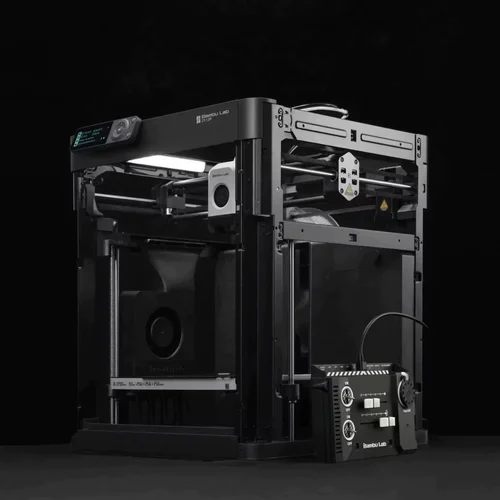
Its direct drive extruder and high-temperature hot end facilitate printing with various filaments, including PLA, PETG , and TPU .
Additionally, the P1P is designed with future enhancements in mind, being compatible with Bambu Lab’s Automatic Material System (AMS) for multicolor printing, and can be further customized with printable mod plates, adding layers of flexibility to meet changing needs.
↪Pros
- Blazing Speed: A key highlight is the P1P’s speed, which facilitates rapid printing without compromising quality.
- Simple Auto Bed Leveling: The auto bed leveling streamlines the printing process, particularly advantageous for beginners.
- DIY Custom Side Panels: Customizable side panels add a degree of personalization.
- Optional Multicolor Capabilities: Utilizing the AMS unit, the P1P supports multicolor prints, enhancing creative opportunities.
↪Cons
- Appearance: The P1P’s “naked” design may not appeal to everyone as it lacks side panels.
- Noise Level: The printer can be loud in operation, which may be a concern for certain settings.
- Proprietary Parts: Using proprietary parts can increase maintenance and upgrade costs.
- Filament Wastage: The AMS unit can lead to filament wastage, affecting cost-efficiency.
The Bambu Lab P1P is appealing to those seeking speed, reliability, and customization with the flexibility to adapt to various needs.
4. Anycubic Kobra Max
Best for Large Prints
Pros
- Enormous Build Size
- Accurate Auto Bed Leveling
- Convenient Build Plate
- Comprehensive Kit
Cons
Large Footprint
Bed Slinger Design
No Larger Nozzle Included
Slow Printing
The Anycubic Kobra Max is a powerhouse in 3D printing, offering an impressive build volume that allows creators to manifest large-scale concepts. With its responsive touchscreen and remarkable printing speed, the Kobra Max distinguishes itself in FDM printing.
Its robust frame and automatic bed leveling offer stability and precision, making it a preferred choice for tackling substantial projects. Designed for hobbyists, enthusiasts, and professionals, the Anycubic Kobra Max boasts a large build volume of 400 x 400 x 450 mm , perfect for ambitious prints. The 4.3-inch LCD touchscreen simplifies navigation and operation.
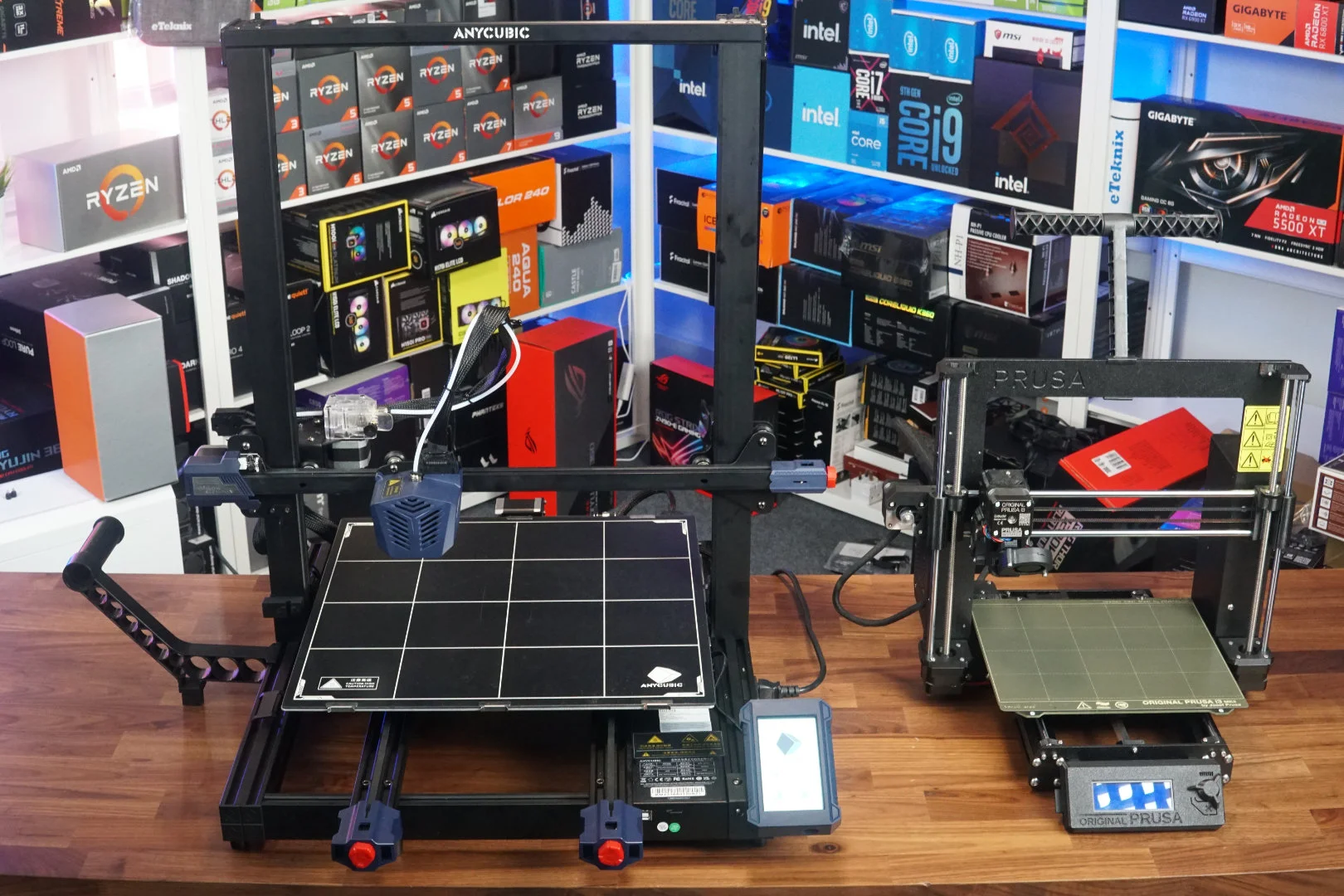
Anycubic Kobra Max
With a maximum printing speed of 180mm/s , faster than many rivals, it ensures swift progress without sacrificing quality, supported by its solid aluminum frame for continuous stability and precision.
↪Pros
- Enormous Build Size: Ideal for large prints like props and costumes, accomplishing projects in a single run.
- Accurate Auto Bed Leveling: The auto leveling yields precise results, simplifying usage.
- Convenient Build Plate: The coated glass bed facilitates easy print releases as they cool.
- Comprehensive Kit: It comes with essential tools and a PLA sample to start off immediately.
↪Cons
- Large Footprint: The significant size requires ample space to operate effectively.
- Bed Slinger Design: The design might be a drawback for some users.
- No Larger Nozzle Included: Lacking a larger nozzle, which can expedite larger prints.
- Slow Printing: Despite a high maximum speed, actual printing can be slow.
The Anycubic Kobra Max offers a budget-friendly solution for those requiring significant build volume, prized for automatic bed leveling and touchscreen interface. However, consider the large size and slower operation pace.
5. Toybox 3D Printer
Best for Newbies/Children
Pros
- Ease of Use
- Creative Freedom
- Kid-Friendly Design
- Educational Value
Cons
Small Build Area
Internet Dependency
Unheated Bed
Proprietary Filament
The Toybox 3D Printer introduces a delightful touch of innovation, sparking creativity for both kids and adults. Its compact, intuitive design reshapes play by allowing users to easily design and print toys. With a simple, user-friendly interface, the Toybox invites everyone into the realm of 3D printing, serving as an ideal gateway for young enthusiasts.
Featuring a modest build volume of 7 x 8 x 9 cm , perfect for small hands and big imaginations, the Toybox operates at a pace of 60 mm/s with a resolution of 200 microns , ensuring precise toy reproduction. The 4mm Smooth-Flow Extruder Head and Easy-Peel bed simplify the printing experience, eliminating complexities.
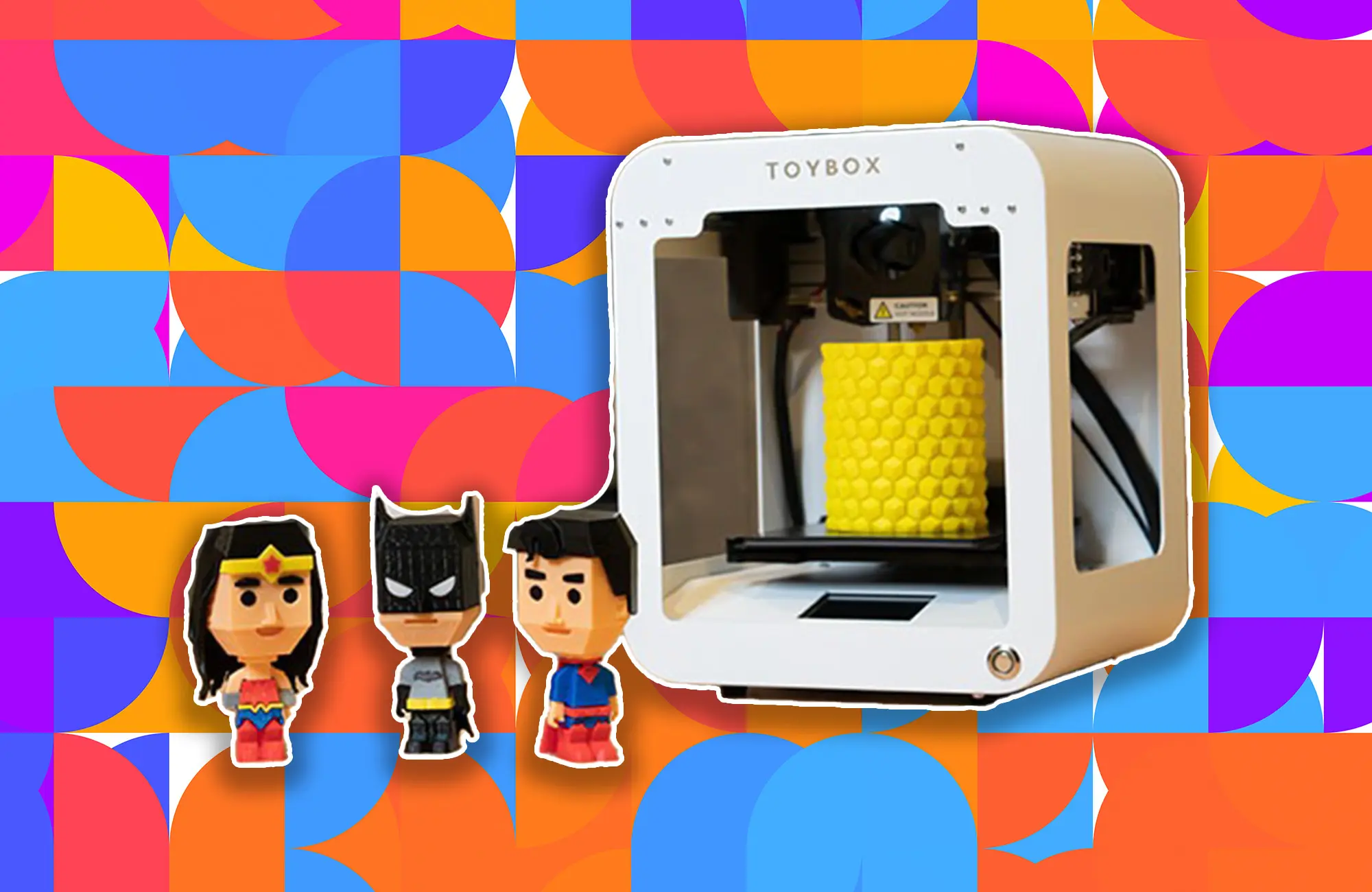
Toybox 3D Printer
Compatible with STL, OBJ , and gCode formats, and offering easy connectivity via 2.4GHz Wi-Fi , sending designs from your smartphone or tablet is seamless. The Toybox puts the magic of creation at your fingertips.
↪Pros
- Ease of Use: Known for reliable, misprint-free performance and one-touch operation, ideal for kids and beginners.
- Creative Freedom: Access to more than 2,000 printable toys and crafting your own designs expands imaginative possibilities.
- Kid-Friendly Design: The robust all-metal frame features rounded edges, safe and easy enough for children to operate with minimal supervision.
- Educational Value: Introduces children to 3D printing and design basics, fostering creativity and problem-solving skills.
↪Cons
- Small Build Area: The build area may limit the size of toys that can be printed.
- Internet Dependency: Requires an internet connection to access its design library, which could be a constraint.
- Unheated Bed: An unheated bed may affect print adhesion compared to other printers.
- Proprietary Filament: Limited to its brand of filament, which may restrict material variety and increase long-term costs.
The Toybox 3D Printer is a doorway into 3D printing, offering a joyful and educational experience that encourages creative thinking and idea realization.
Look for printers with an easy setup, intuitive controls, good customer support, and a robust online community.
Entry-level 3D printers can range from $200 to $500, depending on features and quality.
You can print a wide variety of objects, but always check the printer’s material compatibility and build volume limits.
Yes, if you follow the manufacturer’s safety guidelines, such as proper ventilation and not touching hot surfaces.
Regular maintenance includes cleaning the build plate, lubricating moving parts, and updating firmware.
Check for common issues like bed leveling, filament quality, and slicer settings. Online communities can also offer support.
