Razer Synapse is the accompanying software with Razer products which allows users to customize their Razer products by changing the lighting, adding Macros, changing functions etc. Synapse is also considered the ‘go-to’ software in order to check the authenticity of your Razer product.
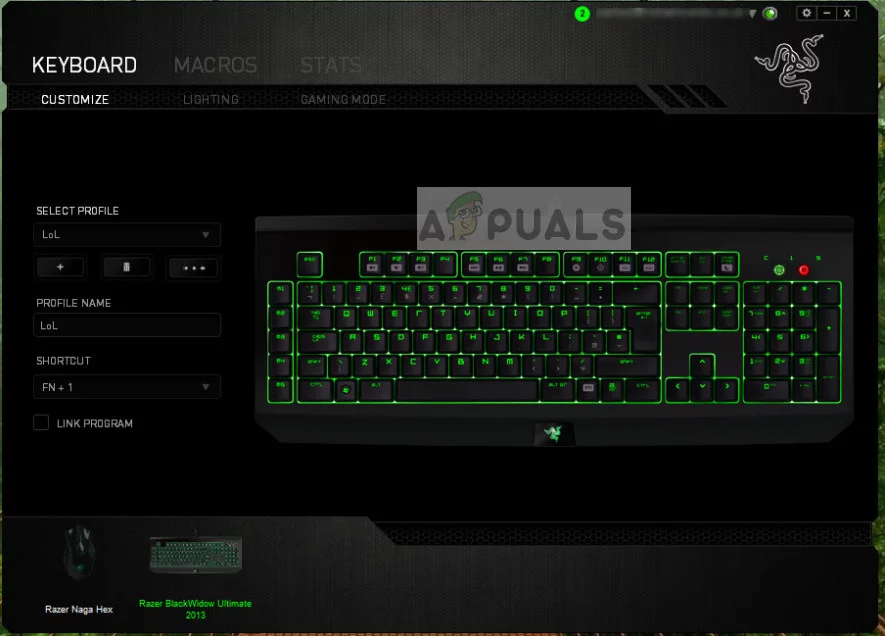
Razer Synapse keyboard profiles
Issues involving failure to connect Razer devices using Synapse are very common and not rare at all. These issues are present since the software was launched and they all resurface every now and then whenever Windows or Synapse is updated or a new feature is added.
However, before you proceed with the solution, you need to make sure that you have a genuine Razer product which you are attempting to connect. If you have a copy or a lookalike, you will not be able to connect it to Synapse no matter what.
What causes Razer Synapse not to detect devices?
Getting every peripheral recognized on your computer independent of the operating system and the Synapse version is no easy task. That is why the causes why your device may not get recognized are quite diverse:
- You are running an older version of Windows 7 . As reported by several users, Windows 7 home and education do not support Synapse properly. All later versions of Windows are supported.
- The USB drivers from which you are connecting your mouse is not updated or contains some discrepancies.
- Synapse software is in an error state . This happens more often and a simple reinstallation fixes the issue.
- You might be installing older drivers for your Razer products from the CD instead of the latest ones available.
- Sometimes new but unstable drivers can prevent it from detecting devices and they might also trigger high CPU usage by Razer Synapse..
- Make sure that your Windows is updated to the latest version because some versions of Windows have been known to cause issues where the app doesn’t detect devices properly or where it doesn’t open.
Before start going into the details on how to fix this issue, make sure that you have administrator privileges and an active internet connection on your computer.
Basic troubleshooting tips:
Before we go into specific solutions, you should try the basic troubleshooting tips and see if any of the cases apply to you. This might help us rule out a hardware problem without putting in much effort.
- Try plugging the peripherals into another USB port . There are several cases where USB port type makes a difference i.e. USB 2.0 and USB 3.0.
- Try plugging your devices to another computer with the Razer Synapse installed. If they get detected there, it means there is something wrong with your computer and can move ahead to fix software specific problems. If it doesn’t get detected, this might be a warning sign about physical issues with your device.
Solution 1: Reinstalling Synapse
One of the leading causes, why your Razer device is not able to connect to Synapse, is because Synapse either has outdated installed modules or some of them are corrupt/missing. This can happen all the time and a simple reinstallation fixes the error. Make sure that you have your account credentials at hand because you will be asked to re-enter them.
- Press Windows + R, type “ appwiz.cpl ” in the dialogue box and press Enter.
- Once in the application manager, search for the entry of Razer Synapse, right-click it and select Uninstall . Also, uninstall Razer Core and all other sub-programs. Furthermore, you can even do the same thing using Settings as shown below.

Uninstalling Razer Synapse
- Now press Windows + E and navigate to the following paths one by one and delete everything contained in them. You can cut-paste them to another location in case you need to reuse them.
C:\Program Files (x86)\Razer

C:\ProgramData\Razer directories
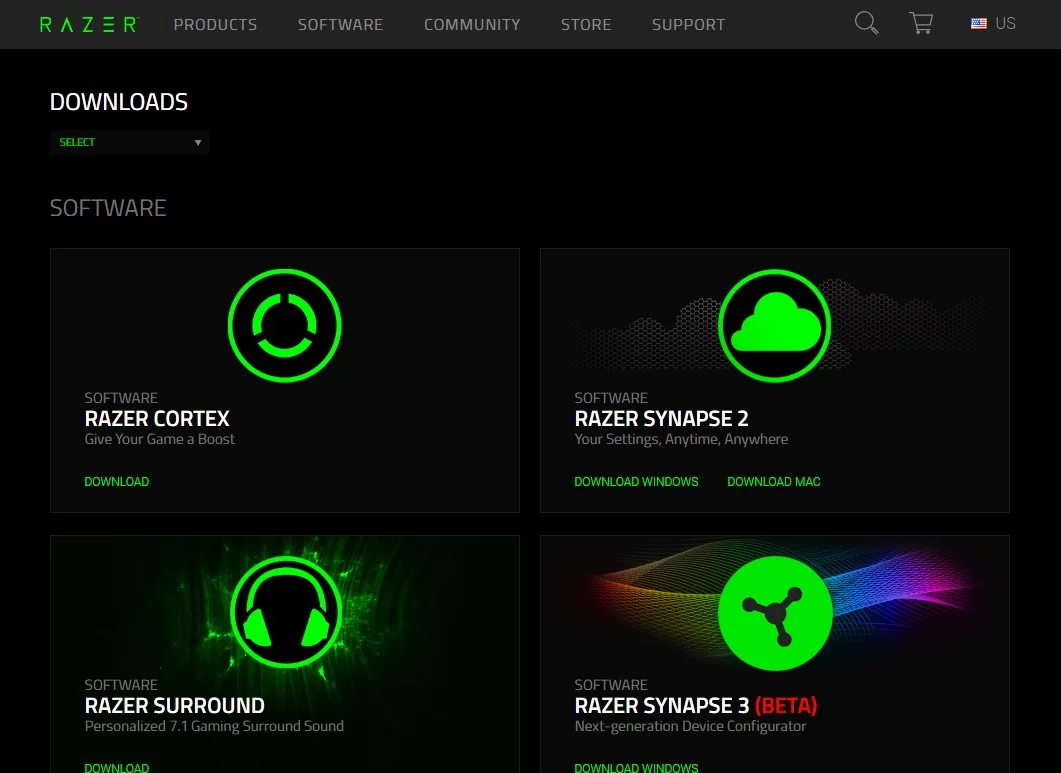
Downloading latest version of Synapse
- Now navigate to the official website of Razer and download the latest Synapse version launched. After installing, restart your computer. When the computer restarts, plug out your Razer peripherals.
- When the computer opens up properly, insert them again and launch Synapse. Check if all your devices get recognized easily.
Solution 2: Reinstalling Drivers
If reinstalling the software doesn’t go well in your case, we can try reinstalling all the drivers to the latest version. First, we will not only uninstall Razer drivers but all HID-compliant input devices. This was the key for most of the users in solving their problems. Next, we will either try to update automatically. If automatic updates are not available, we can make sure that the latest version is installed by navigating to the manufacturer’s website.
- Before we uninstall the devices, make sure that you follow Solution 1 and uninstall Synapse before proceeding.
- Press Windows + R, type “ devmgmt. msc ” in the dialogue box and press Enter.
- Once in the device manager, expand the section of Keyboard and Mice and other pointing devices . Right-click on each entry and select Uninstall device . Make sure that you check the box “ Delete device drivers ” when uninstalling the device.

Uninstalling mouse and keyboard drivers
- Now restart your computer completely and launch Synapse. See if your peripherals get recognized and their latest drivers installed automatically. If you have the latest version of Synapse and an internet connection, the software should automatically install the latest drivers.
If you aren’t able to get your devices detected by Synapse, you can try to install all the drivers manually from your motherboard/manufacturer’s website. Sometimes the very USB ports are not updated or have broken drivers.
- Navigate to the device manager like we did earlier and open the category of Universal Serial Bus controllers .
- Right-click on each entry and select Update driver .

Updating USB drivers – Device manager
- Select the first option Search automatically for updated driver software . Now Windows will connect to Windows update and install the latest drivers automatically. Restart your computer and check if the issue is solved.

Updating drivers using Windows Update
- You can also navigate to your manufacturer’s official website and download the latest drivers available. Unzip all the packages and install them one by one. Don’t forget to restart your computer before checking if Synapse got fixed.
How to Fix “Printer is in an error state” Issue?
The error “ WinRAR Error: Next Volume Is Required ” usually appears when you’re extracting a multi-part RAR archive and WinRAR can’t find (or can’t correctly identify) the next file in the sequence . This often happens when a volume is missing , stored in a different folder , or renamed in a way that breaks the archive’s expected order .

In this guide, we’ll go over the most reliable fixes confirmed by affected users, along with what each method is doing behind the scenes so you can choose the right one for your situation.
Important: To extract multi-volume archives, you should always start extraction from the first file in the set. This is usually file.part1.rar , or (in older sets) the main .rar file that comes before .r01 , .r02 , and so on.
1. Download and Place the Missing RAR File
WinRAR needs all parts of a multi-volume archive to complete extraction. This error usually appears when one of the volumes in a set like .part2.rar , .r01 , .r02 , .001 , and similar naming formats is missing . Downloading the missing volume and placing it in the same folder as the other parts allows WinRAR to continue extracting normally .
- Look at the error message or review the list of archive parts in the folder.
- Identify which volume is missing (for example, part2.rar , .r02 , .001 , etc.).
- Go back to the website or source where you downloaded the archive.
- Locate and download the exact missing file using the same naming format as the others.
- Make sure the new file name matches the pattern of the rest. Example: If you have file.part1.rar and file.part3.rar , the missing one must be file.part2.rar .
- Move the downloaded missing volume into the same folder as the other archive parts.
- Confirm that all parts are in a single folder before extracting.
- Right-click the first file in the series (usually part1 or the main .rar file) and select Extract Here or Extract to Folder .
- WinRAR should now detect all volumes and continue extraction normally .
2. Manually Browse & Select the Next Volume
Use this method only if the next volume already exists , but WinRAR is failing to detect it automatically. This can happen due to incorrect naming , the file being in a different location , or a temporary file access issue. Manually browsing helps WinRAR locate the correct volume and resume extraction without interruption .
- Right-click the first file in the series (usually .rar or part1.rar ) and select Extract Here or Extract to Folder .
- When WinRAR cannot find the next volume, it will show the “ Next Volume Is Required ” message.
- A small window will appear, allowing you to manually select the next volume .
- Use the file explorer window to locate the folder where the other archive parts are saved.
- Select the next part based on the naming order (example: select file.part2.rar after file.part1.rar ).
- Make sure the selected file matches the naming format of the archive (no extra characters like (1) and no mismatched numbering).
- WinRAR will resume extraction using the selected volume .
- If additional volumes are missing or stored separately, WinRAR may prompt you again. Repeat the same process until extraction completes.
3. Rename the RAR files in Order
WinRAR relies on a proper naming sequence (such as file.part1.rar , file.part2.rar , file.part3.rar ) to extract multi-volume archives. If a file is named incorrectly, contains extra characters, or is out of order, WinRAR may fail to locate the next volume and show this error. Renaming the files correctly helps WinRAR follow the sequence and extract the archive without interruptions .
Note: Renaming only changes the file name , not the file contents. The goal is to restore the correct sequence so WinRAR can detect the next volume.
- Go to the folder where all the RAR files are saved.
- Make sure all parts of the archive are present and stored in the same folder .
- Check how the parts are currently named . Common patterns include:
file.part1.rar, file.part2.rar, file.part3.rar
file.rar, file.r01, file.r02, file.r03
- Look for files that don’t match the expected numbering pattern (for example, file.part01.rar , file.part1(1).rar , or unrelated names).
- Rename each file so it follows the same order without extra characters or mismatched numbering. Example:
Incorrect: file.part1.rar, file.part3.rar, file.part2(1).rar
Correct: file.part1.rar, file.part2.rar, file.part3.rar
- Make sure the text before the number is exactly the same for all files.
- Only the last part number should change.
- Right-click the first file in the series (usually part1.rar or the main .rar file) and select Extract Here .
- WinRAR should now recognize the sequence and continue extraction normally .
If you still get the same prompt: the archive set is likely incomplete (a part was never downloaded or was removed), or one of the volumes is corrupt and must be re-downloaded from the original source.
