It was anticipated that the upcoming Apple Watch Ultra upgrade would switch to microLED technology, but a major setback may have derailed those plans, according to a recent report. Put simply, the corporation may have gone further than planned in pursuing its goal of releasing its first microLED product.
The statement from ams OSRAM AG regarding the “ cancellation of a key project ” is included below; however, it is unclear whether this refers to the Apple Watch Ultra. The supplier’s stock price fell 40% shortly after the announcement, indicating that the majority of its anticipated income may have been dependent on the successful mass production of microLED panels.
“The Management Board of ams OSRAM AG has decided to re-assess the microLED strategy of the company after having been informed of the unexpected cancellation of a cornerstone project for its microLED program. Discussions with the related customer are ongoing.”
Display Supply Chain Consultants at Counterpoint Research later told MacRumors that the microLED Apple Watch Ultra’s cancellation may have been caused by the display technology’s high manufacturing costs and low production yields.
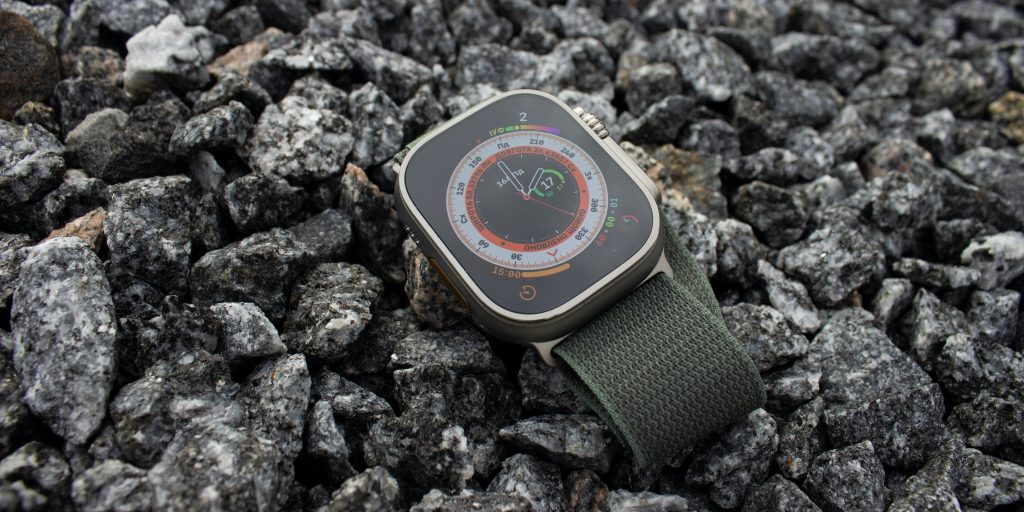
Apple Watch Ultra | Unsplash
Cost Effectiveness
According to estimates, microLED panels are around three times more expensive than OLED panels. As such, it is improbable that the Apple Watch Ultra would have been offered for sale at the same price as its predecessor if it had been introduced with these more advanced panels.
In response to a question about the situation, Apple analyst Ming-Chi Kuo stated today that the project has been canceled for the “ foreseeable future .” According to the expert, the present prices of producing microLEDs are “too high” to make the idea “ economically viable .” “My latest survey indicates that Apple has canceled the Micro LED Apple Watch projects because Apple thinks that Micro LED can’t add significant value to this product, and the production costs are too high to make it economically viable,” Kuo stated. Kuo claims that at the time of the project’s cancellation, ams OSRAM served as Apple’s sole supplier of LED chips. For the “f oreseeable future ,” Apple has “ no plans ” to mass-produce microLED products, according to the expert. Kuo called the cancellation a “ major setback ” for Apple and said some staff members working on microLED development had been let go.
Apple Micro LED update: 1. My latest survey indicates that Apple has canceled the Micro LED Apple Watch projects because Apple thinks that Micro LED can’t add significant value to this product, and the production costs are too high to make it economically viable. 2. Apple has… — 郭明錤 (Ming-Chi Kuo) (@mingchikuo) March 1, 2024
While Ming-Chi Kuo stated that the sole supplier for Apple’s MicroLED lineup was ams OSRAM, Bloomberg’s Mark Gurman states this is wrong. In a replied tweet to MacRumors, Mark stated that ams OSRAM was “ one ” of the suppliers that had stopped these production plans but the project hasn’t been stopped as of yet.
AMS-Osram was one supplier in the Apple Watch Ultra microLED project. There are several others. I doubt it was canceled. https://t.co/wu0mfli3GO — Mark Gurman (@markgurman) February 29, 2024
How to Fix “Printer is in an error state” Issue?
Supposedly compatible with both PlayStation 4 and PlayStation 5 titles, an AMD -powered new portable PlayStation is now in the early stages of development.
A recent YouTube video from Moore’s Law is Dead claims that the Japanese firm is preparing to launch fresh portable products. With a proprietary AMD APU at its core, this console is now in the High Level Design Phase , which means it hasn’t been given the go-ahead for production and will be at least two years away.
There has been no official word on the specifications of this new PlayStation handheld, but according to Moore’s Law is Dead, it will most likely use 18 CUs to ensure compatibility with all PlayStation 4 games on the PlayStation Store
Moreover, PlayStation 5 games will also work on the system, however, creators would need to apply patches to ensure appropriate performance. Given that the PlayStation 5’s clock speeds are changeable, it’s possible that the new system’s GPU could operate at 1.8 GHz or even slower.
Moore’s Law has dropped hints that a new portable console could hit Japanese shelves as a handheld alternative. While that release might happen as soon as two years from now, there’s always a chance it could take longer if given the green light.
A new PlayStation portable may seem unlikely, but a lot has occurred in the gaming industry since the PlayStation Vita’s release. Given the success of competing systems like the Nintendo Switch and Steam Deck, it would not be unexpected for Sony to return to the market with a system that may outperform the Vita thanks to its compatibility with traditional console titles. Take everything with a grain of salt for the time being; we won’t know if Vita will reintroduce meaning until we have formal confirmation.
