Microsoft Excel is a spreadsheet program developed and distributed by Microsoft. It is available across almost all platforms and is used extensively for business and other purposes. Due to it’s easy to use interface and numerous formulas/functions, it has made easy documentation of data a reality. However, quite recently, a lot of reports have been coming in where users are unable to apply a formula to replace a specific letter for a word and an “An Array Value Could not be Found” Error is displayed.
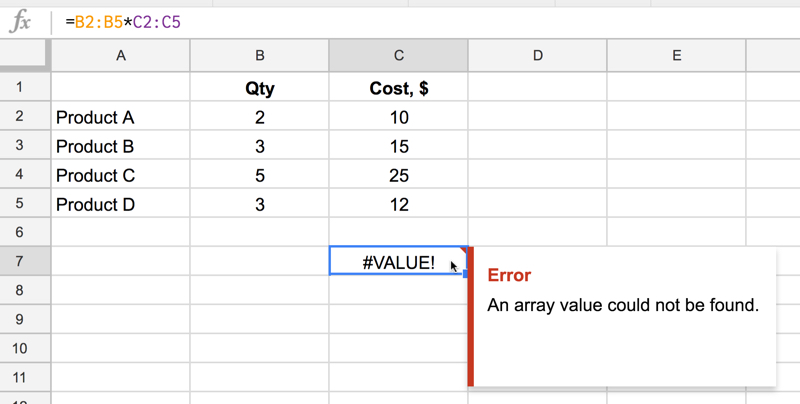
“An Array Value couldn’t be found” error
Usually, there are many formulas that can be applied to make entrail certain commands. But users experiencing this error are unable to do so. Therefore, in this article, we will be looking into some reasons due to which this error is triggered and also provide viable methods to fix it.
What Causes the “An Array Value Could not be Found” Error on Excel?
After receiving numerous reports from multiple users, we decided to investigate the issue and looked into the reasons due to which it was being triggered. We found the root cause of the issue and listed it below.
- Wrong Formula: This error is caused when the substitution formula is entered incorrectly. Most people use the substitution formula to replace a specific letter with a word or a line. This ends up saving a lot of time but if entered incorrectly this error is returned.
Now that you have a basic understanding of the nature of the problem, we will move on towards the solutions. Make sure to implement these in the specific order in which they are presented to avoid conflict.
Solution 1: Using Substitute Array Formula
If the formula has been entered incorrectly, the substitution function will not work properly. Therefore, in this step, we will be using a different formula to initiate the function. For that:
- Open Excel and launch your spreadsheet to which the formula is to be applied.
- Click on the cell to which you want to apply the formula. Selecting the cell
- Click on the “ Formula ” bar.
- Type in the following formula and press “ Enter ” =ArrayFormula(substitute(substitute(substitute(E2:E5&" “,” y “,” Y “),” yes “,” Y “),” Yes “,” Y “))
- In this case, “ Y ” is being replaced with “ Yes “.
- You can edit the formula to fit your needs, place the letter/word that needs to be replaced in place of “Y” and the letter/word that it needs to be replaced with needs to be placed in the place of “yes”. You can also change the address of cells accordingly.
Solution 2: Using the RegExMatch Formula
If the above method didn’t work for you, it is possible that by approaching the problem with a different perspective might solve it. Therefore, in this step, we will be implementing a different formula which uses a different set of commands to get the work done. In order to apply it:
- Open Excel and launch your spreadsheet to which the formula is to be applied.
- Click on the cell to which you want to apply the formula.
- Select the “ Formula ” bar. Selecting the formula bar
- Enter the formula written below and press “ Enter ” =if(REGEXMATCH(E2,"^Yes|yes|Y|y”)= true ,“Yes”)
- This also replaced “Y” with “Yes”.
- The values for “Y” and “Yes” can be changed to fit your needs.
Solution 3: Using Combined Formula
In some cases, the combined formula generated from the above mentioned two formulas gets the trick done. Therefore, in this step, we will be using a combined formula to fix the error. In order to do that:
- Open Excel and launch your spreadsheet to which the formula is to be applied.
- Select the cell to which you want to apply the formula.
- Click on the “Formula” bar. Clicking on the formula bar
- Enter the formula mentioned below and press “Enter” =ArrayFormula(if(REGEXMATCH(E2:E50,"^Yes|yes|Y|y")= true ,“Yes”))
- This replaces “ Y ” with “ Yes ” as well and can be configured to fit your conditions accordingly.
Solution 4: Using RegExReplace Formula
It is possible that the “RegExReplace” formula might be required to eradicate the error. Therefore, in this step, we will be using the “RegExReplace” formula in order to get rid of the error. For that:
- Open Excel and launch your spreadsheet to which the formula is to be applied.
- Select the cell to which you want to apply the formula.
- Click on the “ Formula ” bar. Clicking on the Formula bar
- Enter the formula mentioned below and press “ Enter ” =ArrayFormula(regexreplace(" “&E2:E50&” “,” y | yes | Yes “,” Y “))
- This replaces “ Y ” with “ Yes ” and can be configured to fit your situation accordingly.
How to Fix “Printer is in an error state” Issue?
The error “ WinRAR Error: Next Volume Is Required ” usually appears when you’re extracting a multi-part RAR archive and WinRAR can’t find (or can’t correctly identify) the next file in the sequence . This often happens when a volume is missing , stored in a different folder , or renamed in a way that breaks the archive’s expected order .

In this guide, we’ll go over the most reliable fixes confirmed by affected users, along with what each method is doing behind the scenes so you can choose the right one for your situation.
Important: To extract multi-volume archives, you should always start extraction from the first file in the set. This is usually file.part1.rar , or (in older sets) the main .rar file that comes before .r01 , .r02 , and so on.
1. Download and Place the Missing RAR File
WinRAR needs all parts of a multi-volume archive to complete extraction. This error usually appears when one of the volumes in a set like .part2.rar , .r01 , .r02 , .001 , and similar naming formats is missing . Downloading the missing volume and placing it in the same folder as the other parts allows WinRAR to continue extracting normally .
- Look at the error message or review the list of archive parts in the folder.
- Identify which volume is missing (for example, part2.rar , .r02 , .001 , etc.).
- Go back to the website or source where you downloaded the archive.
- Locate and download the exact missing file using the same naming format as the others.
- Make sure the new file name matches the pattern of the rest. Example: If you have file.part1.rar and file.part3.rar , the missing one must be file.part2.rar .
- Move the downloaded missing volume into the same folder as the other archive parts.
- Confirm that all parts are in a single folder before extracting.
- Right-click the first file in the series (usually part1 or the main .rar file) and select Extract Here or Extract to Folder .
- WinRAR should now detect all volumes and continue extraction normally .
2. Manually Browse & Select the Next Volume
Use this method only if the next volume already exists , but WinRAR is failing to detect it automatically. This can happen due to incorrect naming , the file being in a different location , or a temporary file access issue. Manually browsing helps WinRAR locate the correct volume and resume extraction without interruption .
- Right-click the first file in the series (usually .rar or part1.rar ) and select Extract Here or Extract to Folder .
- When WinRAR cannot find the next volume, it will show the “ Next Volume Is Required ” message.
- A small window will appear, allowing you to manually select the next volume .
- Use the file explorer window to locate the folder where the other archive parts are saved.
- Select the next part based on the naming order (example: select file.part2.rar after file.part1.rar ).
- Make sure the selected file matches the naming format of the archive (no extra characters like (1) and no mismatched numbering).
- WinRAR will resume extraction using the selected volume .
- If additional volumes are missing or stored separately, WinRAR may prompt you again. Repeat the same process until extraction completes.
3. Rename the RAR files in Order
WinRAR relies on a proper naming sequence (such as file.part1.rar , file.part2.rar , file.part3.rar ) to extract multi-volume archives. If a file is named incorrectly, contains extra characters, or is out of order, WinRAR may fail to locate the next volume and show this error. Renaming the files correctly helps WinRAR follow the sequence and extract the archive without interruptions .
Note: Renaming only changes the file name , not the file contents. The goal is to restore the correct sequence so WinRAR can detect the next volume.
- Go to the folder where all the RAR files are saved.
- Make sure all parts of the archive are present and stored in the same folder .
- Check how the parts are currently named . Common patterns include:
file.part1.rar, file.part2.rar, file.part3.rar
file.rar, file.r01, file.r02, file.r03
- Look for files that don’t match the expected numbering pattern (for example, file.part01.rar , file.part1(1).rar , or unrelated names).
- Rename each file so it follows the same order without extra characters or mismatched numbering. Example:
Incorrect: file.part1.rar, file.part3.rar, file.part2(1).rar
Correct: file.part1.rar, file.part2.rar, file.part3.rar
- Make sure the text before the number is exactly the same for all files.
- Only the last part number should change.
- Right-click the first file in the series (usually part1.rar or the main .rar file) and select Extract Here .
- WinRAR should now recognize the sequence and continue extraction normally .
If you still get the same prompt: the archive set is likely incomplete (a part was never downloaded or was removed), or one of the volumes is corrupt and must be re-downloaded from the original source.
